A quick introduction to cider tasting
Cider tasting isn't pretentious. It can be a great social activity and lots of fun – whether you do it at home with friends, book onto a scheduled event, or make it an enjoyable and intriguing addition to a party/celebratory gathering, such as a birthday, stag or hen do or a wedding. If you decide to do a DIY approach, why not reach out to a specialist cider shop to get some recommendations for a combination of ciders that will give you a broad tasting experience.
By trying a few different styles/categories of cider at a time, you'll come to notice how different they are - in appearance, smell, taste and how they feel in your mouth. You'll also quickly get a sense of what you like and don't like.
Similar to wine tasting, cider tasting has three steps to it, which are to look, smell and taste. Let's guide you through it.

Step 1 – How does the cider look?
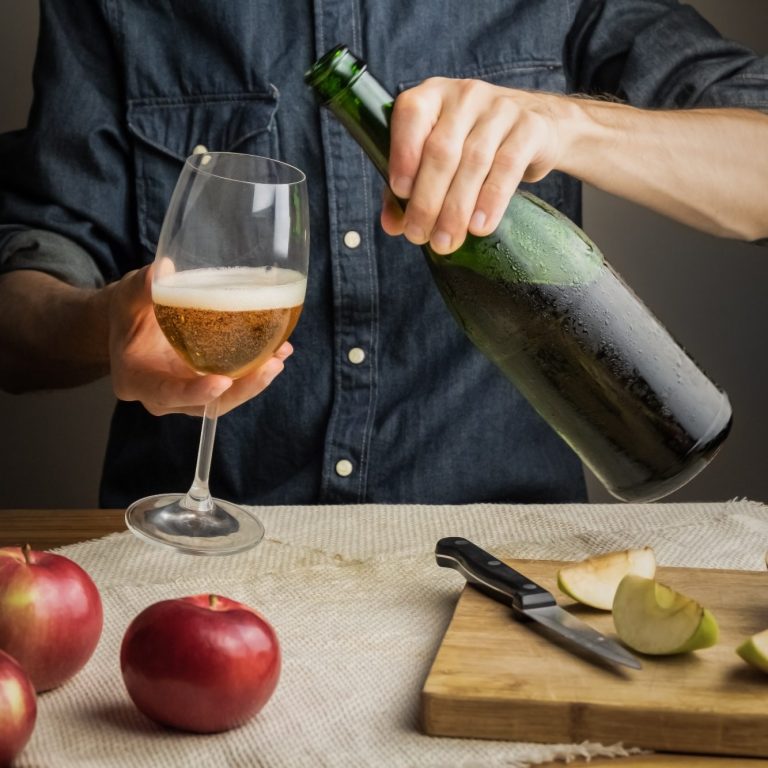
Pour your cider, hold it up to the light and have a good look at it. Here you want to pay attention to the clarity, colour and carbonation (i.e. how fizzy it is).
Is the cider clear, slightly hazy/cloudy or very hazy/cloudy? And if it is hazy/cloudy, is there any sediment? Does it have a distinctive colour – like amber, yellow or gold – or is it more or less colourless? Is it still, lightly sparkling like Prosecco, or as fizzy as Champagne?

Step 2 – How does it smell?
What aromas are you getting from it? A clear, almost colourless New World cider might be giving off a crisp freshness, maybe some citrus, freshly cut grass, or something like Granny Smith apple, whereas a hazy, gold or amber-coloured Old World cider at the opposite end of the scale might remind you of bolder smells such as hay, maybe an earthiness, a woodiness or something like smoky ham. It may even have a hint of farmyard about it - and please don’t be put off by this description, it’s really quite enticing!
The range of aromas you can get from different ciders is really quite vast and you'll find that, with every cider, you can actually identify a combination of aromas and scents. You might come across a spiciness, something almost medicinal, perhaps a malty aroma, a hint of toffee apple or caramel, or notes of all different types of fruits. There may indeed be added fruits, spices or flavours that will be contributing to the smell.
If you're tasting cider in a group, compare notes on the aromas you’re picking up. - the more creative the descriptions, the better!
Step 3 – What does it taste like?
The final step is to take a mouthful and explore it like you would if you were wine tasting. Allow the cider to roam your mouth and reach all your taste buds, so that you’re getting the full flavour experience.
Are you tasting what you smelled? Are there new flavours that you didn’t expect? How does the cider feel in your mouth and how does the level of carbonation (fizziness) contribute to the experience? Is it gentle and refreshing, maybe sweet and juicy, or does it leave you with a drier feeling in your mouth? And does the flavour linger in your mouth or disappear quickly?
Again, you can compare notes with your fellow tasters. The fun doesn't just come from tasting the cider, it's also about the shared experience that goes with it.